

We finally built better tools for our meetings. Then we used them to stop paying attention.
A few years ago, a group of researchers ran a quiet little experiment. They asked people to take notes during a series of talks. Some got a tool that did almost all the work: clean, structured notes, generated automatically. Some got a tool that helped a little. And some got the note-taking equivalent of a blank page.
Then they tested what everyone remembered.
The people whose tool did the most remembered the least. On its own, that is not shocking. Lean on a crutch and the muscle goes soft. What should stop you cold is this: when they were asked which method they preferred, they picked the one that had taught them the least. It asked the least of them. It felt easy. So they liked it best.
Now take that one small room and scale it up to every meeting in the country, about 55 million a day, according to the organizational psychologist who has spent his career counting them, and you have a quiet explanation for something most of us feel but cannot name. We have been handed better tools for thinking together than any generation of workers in history. And our meetings keep getting worse.
Not despite the help. In part, because of how we use it.
This is a story about the most expensive thing we spend at work and never write down. It is also about a small number of people who have quietly figured out how to stop wasting it.
The number that shouldn’t be possible
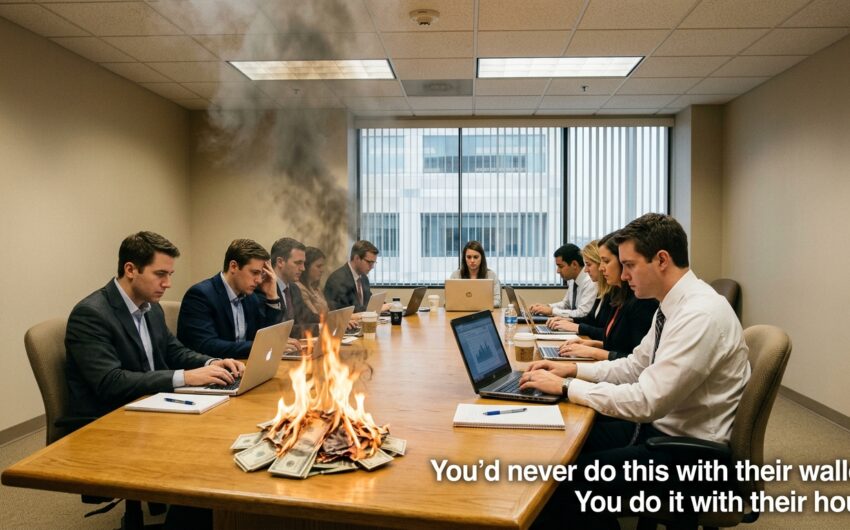
Those 55 million daily meetings cost American organizations around $1.4 trillion a year. About half that time, by the same research, is not well spent.
A number that big stops meaning anything, so let me shrink it. If you spent a dollar every second, no sleeping, no stopping, it would take you more than 44,000 years to spend $1.4 trillion. We burn that annually, and about half of it produces nothing anyone would miss.
But dollars are the cheap way to measure this. Here is the expensive way. Atlassian estimates that inefficient meetings waste around 24 billion working hours a year in the United States. Convert those to human lifetimes of effort and you get something close to 2.74 million years.
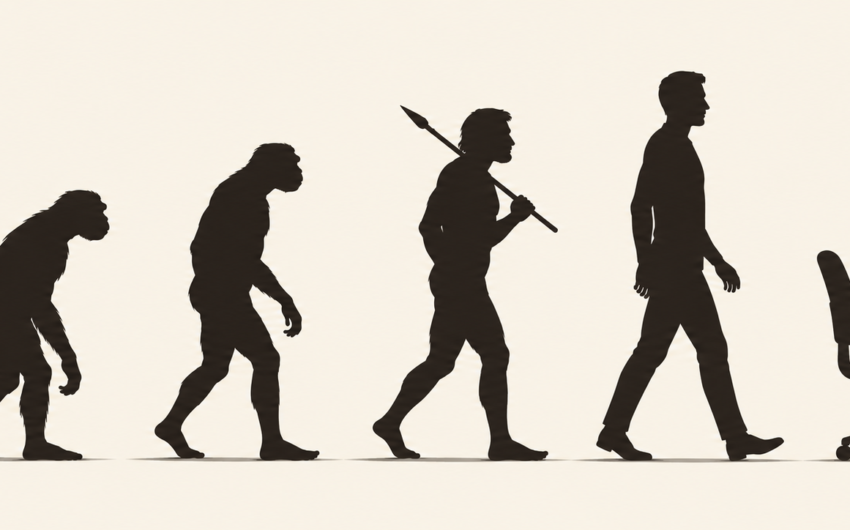
Our species, or anything a paleontologist would call human, is roughly 2.8 million years old.
Sit in that for a second. Every year, we pour very nearly the entire age of humanity into meetings, and half of it goes to meetings that could have been a message. Not once. Every year.
Why aren’t they better?
Every excuse we ever had for a bad meeting is gone.
Preparing used to be work. You had to think, write, structure, anticipate. Now there is something in nearly every meeting that promises to catch what you miss: to take the notes, hold the decisions, summarize the hour. The friction that made preparation hard has quietly been removed.
And yet. Go back to that first room. The tool that did the most thinking produced the least understanding, and people preferred it, because it asked nothing of them. That is the whole problem in miniature. When something in the room promises to remember everything, no one in the room has to be accountable for anything.
The record got automated. The responsibility did not.
We have mistaken the transcript for the meeting. We walk out with a flawless summary of a conversation that decided nothing and call it productive, because there is a document to prove we showed up. The tool that should have raised the floor became a place to hide under it.
What an agenda is really for
At this point you expect me to say: so write an agenda. The old rule, no agenda, no meeting.
Except the science does not back the rule. Steven Rogelberg, the researcher behind most of what we actually know about meetings, found that having an agenda, by itself, does almost nothing for how good a meeting is. About half of all agendas are just recycled from last time: the same tired topics, copied forward, checkbox satisfied.
An agenda is not a magic document. A recycled one is theater.
What predicts a good meeting is not the paper. It is whether someone thought: what is this hour for, who needs to be there, what question are we answering, who owns what when it ends. The agenda is only worth anything as the visible residue of that thinking. So here is the truer version of the rule. An agenda is not a document. It is proof that someone did the thinking before they spent your time.
Proof, in other words, of good manners. Because a meeting is not really a logistical event. It is an act of hospitality.
When you put eight names on an invite, you are asking eight people to hand you the one thing they can never earn back. You can make money back with a good year or a lucky break. Nobody has ever worked a double shift to earn back a Tuesday afternoon. A good host does not invite people in, wander off unprepared, and leave them sitting in an awkward silence for an hour. We do exactly that with calendars all day and call it work.
See a meeting as an act of unreasonable respect for other people’s time, and the rules stop feeling like productivity hacks. They start feeling like decency.
The prepared minority
Now the part nobody says out loud. Most people are never going to do this.
Only about a third of meetings have a written agenda, and the ratio seems to hold for people, too. Roughly a third of any group will do the small upfront work. The other two-thirds coast on whatever structure someone else builds. That is not cynicism. It is one of the most reliable findings in social psychology.
They call it social loafing. Over a century ago a French engineer, Maximilien Ringelmann, had people pull a rope, alone and in groups, and measured the force. The bigger the group, the less each person pulled. Not from fatigue, but because they could feel someone else was there to carry it. The mechanism is diffusion of responsibility: the more people in the room, the less any one person feels accountable, and the more everyone assumes someone else will think, prepare, and decide.
A meeting without a clear owner is a rope with ten hands on it and no one really pulling.
So I will not try to convert the lazy two-thirds. They will keep sleepwalking through their calendars no matter what I write. This is not a plea for everyone to change. It is an invitation to stop being most people.
And here is the upside of a world where two-thirds will not bother: the bar is on the floor. The few who host their meetings with real care do not just run better meetings. They become the people others trust with their time. In a culture drowning in pointless calls, being the person whose meetings are worth attending is a visible, unfair advantage. You do not have to fix everyone. You just have to be the exception.
What the exceptions do
None of it is complicated, which is exactly why so few people bother. Four moves.
Obey the 80/20. Roughly 20% of your meetings make 80% of the real decisions. The rest is the tax. Do not run every meeting better. Protect the vital few and kill the tax. One study of 76 companies found that cutting meetings sharply lifted productivity by over 70%.
Keep the room small. “Who actually needs to be here?” is not etiquette, it is how you keep the rope taut. Every extra body raises the odds that everyone assumes someone else is doing the thinking.
Make people think before they talk. Some companies open by having everyone read a short written memo in silence, no slides, before a word is spoken. You can hide sloppy thinking behind bullet points. You cannot hide it in full sentences. And reading it in the room assumes nobody prepared, then fixes that on the spot. Not distrust. Design.
End early, and name names. The highest-leverage move in any meeting costs five minutes: end an hour meeting at 50, and use what is left to hand every next step to a specific person, out loud. Not “we should look into that,” but “Maria owns this, by Friday.” That single sentence is the antidote to diffusion of responsibility. It is where a conversation becomes work.
You won’t win this with willpower
Here is why all four will fail if you rely on discipline. You are human. Like the people in that first room, you will reach for whatever asks the least of you, and so will everyone else. Fixing meetings by resolving to try harder is a bet against human nature, and human nature is undefeated.
So do not fight it. Route around it.
The reason meetings got worse is that our tools stripped the friction off the wrong thing. They made recording effortless and left preparing exactly as hard as it always was. The fix is to move the friction back, to make the prepared path the path of least resistance, so that doing the right thing becomes the easy thing instead of the disciplined one.
Which brings me to the only thing I will actually ask you to do.
The gift
You started reading because of a question, and answering a few good questions is exactly how a great meeting gets built. So that is what I made you: a prompt that interviews you for about sixty seconds and hands back a purpose-built agenda, and that tells you when you should not be meeting at all. Free, no signup, no catch. Take it here, along with a version you can fork for your own kinds of meetings.
It does the one thing willpower cannot: it makes preparing easier than not preparing. It puts the friction back exactly where it earns its keep.
Because the point was never to be busy about meetings. It was to stop spending the one currency none of us can earn back: yours, and everyone’s whose name you put on that invite. Work smarter about the hour and you do not just get a better meeting. You get the hour back.
Most people will not do any of this.
You already read to the end. You were never most people.